Skip to content

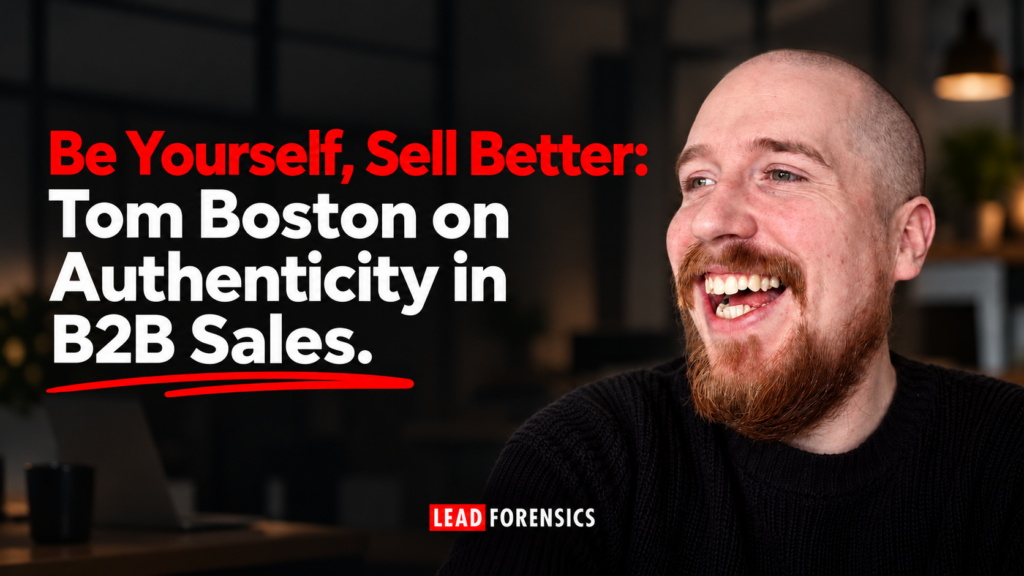
Picture a cold call that opens with an apology for finishing a biscuit.
That’s a real opener Tom Boston used to run – and it worked, not despite being strange, but because of it. Tom is Brand Growth Manager at My Sales Coach and, if you’ve spent any time on sales LinkedIn in the last few years, you’ve almost certainly seen his content: honest, funny, and built entirely on real experience from the sales floor rather than borrowed theory.
He built his following from cold calling in the trenches to becoming one of the most recognisable voices in B2B sales – not with a content strategy, but almost by accident. We sat down with him for our podcast, What I Wish I’d Known About Sales, to talk about what he wishes someone had told him starting out, and why being authentically yourself might be the real edge more sellers are missing.
Nobody Cares
Ask Tom for the one piece of advice he returns to most, and it isn’t a framework or a script. It’s two words someone gave him years ago.
“Nobody cares. It’s a really tough piece of advice, but I think about that every week. I think about that every time I write anything. Because if you start with nobody cares, you can go: okay, well, what do they care about? Well, they care about themselves, their problems. They like to give their insights.”
It’s a deliberately blunt corrective to the instinct most new sellers have: to post thought leadership, to sound like an expert, to educate the market. Tom’s take is that this almost always backfires.
“Rather than try to create content on the platform which puts you out as an expert, just be the person who asks questions of that space. Be curious, start conversations. You can raise ideas and encourage people to comment.”
The shift, in other words, is from telling a prospect what you know to asking what they think – a small reframe that changes almost everything else he does.
The Accidental Influencer
Tom describes himself as an “accidental” sales influencer, and he means it literally – there was never a plan to build an audience.
“I did not sit down and go, okay, how do I become influential on LinkedIn? How do I start to get tens of thousands of followers? How do I go viral? That wasn’t the plan. I was just trying to book more meetings.”
A revamped, more human LinkedIn profile was step one. The real turning point came later, with a video about the excuses reps make for not updating their CRM – the kind of small, relatable pain every sales team recognises.
“This video got like tens of thousands of impressions. There’s something here when it comes to highlighting a problem or a pain or something that’s relatable, doing it in a kind of funny way, and most importantly inviting other people to give their opinion.”
His theory for why sales content made this way never runs dry is simple: comedy is pain, and sales produces an endless supply of it.
“If we think about comedy being pain, fundamentally we like to laugh at things that go wrong. A lot of things go wrong in sales. There is so much to highlight in the world of the grind of sales that I don’t think we’re ever going to run out of ideas.”
Make the Aim of the Call to Make Them Smile
Before any of this, Tom was cold calling gas and electricity deals from a huge sales floor in the north-east of England – what he calls “surviving thousands of dials.” The moment that changed how he approached a call came from watching a colleague.
“I used to sit next to someone and I’d hear her on the phone making cold calls, but she was belly laughing. And you’d listen back to the calls and the prospect was belly laughing too. I kind of thought, I’m here sweating, I’m going home with a headache, and I looked over and said: she’s having the time of her life, but more importantly the people she’s calling are having the time of their life too. So I was like, okay, maybe I need to steal a few of those techniques.”
That became the real goal of a cold call, for Tom – not a pitch, not a close, but a reaction.
“Maybe I could just try to make the aim of the call to make the other person smile. No one’s really going to close on the first call, so remembering is really important. If you can be the person that was memorable, then maybe you’ll have a good conversation on the second call, the third call, the fifth email, the LinkedIn DM, the video, whatever it might be.”
It’s a useful reframe for anyone working a long B2B sales cycle, where the first touch is rarely the one that counts. For more on building that kind of first impression, see our guide to cold calling in B2B.
Perfect Is Instant – That’s Exactly the Problem
Tom’s cold call openers got deliberately strange for the same reason. One of his regulars:
“I’m sorry, Martin, you’ve just caught me finishing a biscuit. Just give me a second – I’m making cold calls and I’m eating custard creams. I’m glad I managed to catch up, it’s Tom Boston, have you heard of My Sales Coach?”
The point wasn’t to be funny for its own sake. It was what that moment of being different made possible on the next attempt.
“What that allows me to do is call you next week and go: hey Martin, it’s the biscuit guy. I’ve put the biscuits away for this call – is this a better time for us to speak?”
He tells a similar story about sales trainer John Barrows, whose favourite voicemail trick was to pretend to swear and mess up mid-recording, then hang up.
“The responses to those voicemails were way better than anything he’d ever done which sounded thought out and professional. No one on a cold call or a cold voicemail has ever gone, ‘oh, messed that one up’ – that really stuck with me.”
For Tom, this stops being a stylistic choice and becomes a practical one – because AI can now produce the “thought out and professional” version instantly, for free, at scale.
“How do we write an email that AI could not write? How do we send a video to someone that AI could not create? I’ve started leaving spelling mistakes in LinkedIn posts now, because at least it proves that I wrote it. Whereas a few years ago I would spell-check everything, make sure it’s perfect. But perfect is easily accessible now. Perfect is instant. So I think a key theme going forward is that imperfection actually becomes a tool salespeople can use. Yes, I could send a thousand perfect sales emails – but why not send three imperfect ones that don’t read like anything else someone’s going to see that day?”
Stop the Relentless Follow-Up
If imperfection is the thing AI can’t fake, Tom’s biggest complaint about modern outreach is the opposite: follow-ups that all sound exactly the same, AI-reworded or not.
“I’ve got emails in my inbox right now with those relentless follow-ups, but not one of them has gone, ‘you’re not replying – here’s a voice note, let me just get twenty seconds to explain what I’m trying to speak to you about,’ or ‘hey, I made a quick video, this might bring it to life a bit more.’ Instead we just get, pretty much, the same email I sent last Wednesday – I’ve just changed the words a little with AI. That needs to stop.”
He connects this directly to a sales training line he can’t stand: that every no is one step closer to a yes.
“I’m going, well actually, no – you’re just normalising being told no, and being okay with throwing enough at the wall and hoping some of it sticks. Let’s focus on getting the yes. How good is that lead going to be anyway, the one that’ll speak to anyone? We want the person who goes, that’s caught my attention, tell me more.”
The fix isn’t more follow-ups. It’s different ones.
Learn the Language of Your Buyer
Asked what skill today’s SDRs and AEs most need and aren’t focusing on, Tom didn’t point to a sales technique at all.
“Learning the language of their buyer. It’s really easy to know the language of your product or service – you’ve probably sat through two or three weeks of onboarding. But it’s more beneficial to spend time joining the webinars your prospects are attending, listening to the podcasts your buyer is listening to. When you do that, you can jump on a call and speak their language, and it adds instant authority – even as a young rep on their first sales role.”
It’s the research equivalent of the same instinct running through the rest of his advice: stop performing expertise, and start paying attention to what the other person actually cares about. For a practical breakdown of the research itself, see our guide to pre-call research for cold calling.
Stop Hiding Who You Are
Asked what he wishes someone had told him when he started in B2B sales, Tom doesn’t point to a skill gap. He points to the version of himself he tried to hide.
“I actually toned down my accent quite a lot to speak to real people, real CEOs. I kind of laugh about that now, thinking back. I’d taken my personality and gone, well, that’s not really for work. If I’m going to be successful at work, all that fun, silly side of me has to go away, and now it’s time to be serious B2B seller Tom Boston.”
The advice he wishes someone had given him then wasn’t a script or a technique. It was permission to stop performing a flatter, more serious version of himself – to lean into his own personality rather than try to sound like everyone else in the room. As he put it, he had to figure that out for himself, over many years.
That’s really the throughline across the biscuit calls, the voicemail mishaps, and the deliberately imperfect posts: not a set of tactics to copy, but permission to stop performing “professional” and just be recognisably, consistently himself – which turned out to be the thing that was working all along.
About Tom Boston
Tom Boston is Brand Growth Manager at My Sales Coach, where he helps salespeople get unstuck through coaching rather than scripts. He built his sales career from the ground up, starting out making cold calls, and is now a widely recognised voice on sales LinkedIn, known for honest, often funny content rooted in real sales experience – including his recurring sales-manager and sales-rep characters, Larry and Barry.
About This Article
This piece is based on a conversation with Tom Boston for What I Wish I’d Known About Sales, the Lead Forensics podcast.
Stop Missing Out on Opportunities
Being memorable gets a prospect to pick up the phone. Knowing which companies are already looking at your site before they do is what gets you there first. Book a demo to see how Lead Forensics turns anonymous website traffic into real, identifiable companies your sales team can follow up with directly.