Skip to content

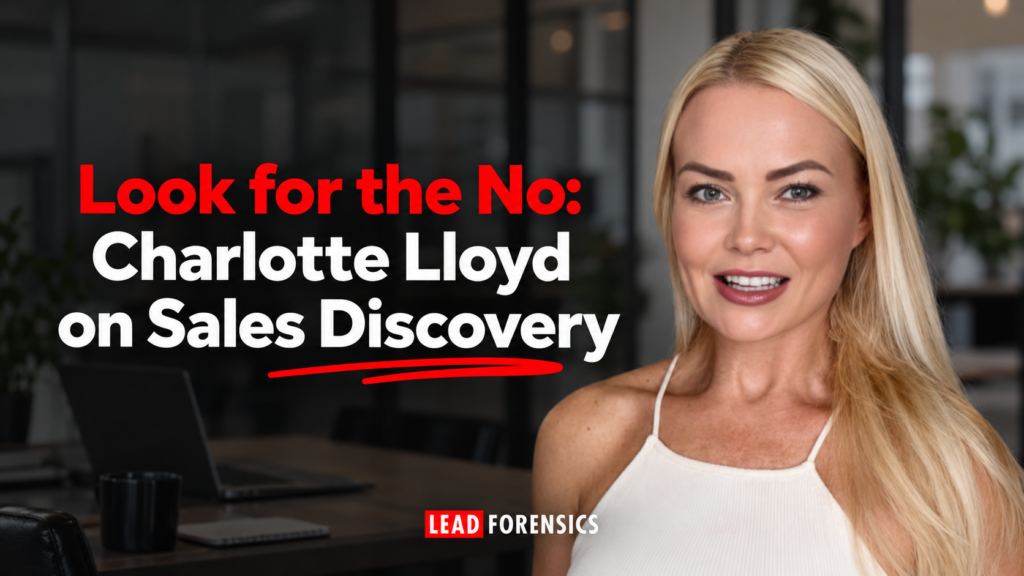
Twenty-five years on, Charlotte is the founder of the Client Acquisition Club and creator of the Elegant Sales System, and she has been named one of the top 100 in sales. She trains founders and corporate sales teams to win premium clients through buyer-led selling and high-trust closing.
When she joined us on What I Wish I’d Known About Sales, she explained why almost everything she was taught about closing was aimed at the wrong moment. Deals don’t die at the close. They die much earlier, on the sales discovery call, when nobody was looking for the no.
Let the Buyer Convince You
Charlotte remembers exactly how she was trained at the start of her career.
“There was this image of pressure and closing. We were taught to convince and to go after every single deal.”
Today she teaches the opposite. She calls her approach “elegant selling”: no pushing, no pitching in the first message, and the buyer at the centre of every conversation.
“Elegant selling is we’re not pushing too hard. We’re making it about the buyer. And the best sales are when you ask the best questions.”
In practice, that means helping the buyer work out for themselves that they have a problem worth solving. Charlotte’s sales discovery questions follow a simple sequence:
- What’s the root cause of the problem?
- Why is it a problem?
- Do they accept that it needs fixing?
- Can they convince you, the seller, that it needs fixing?
That last question flips the usual dynamic.
“You’re not the one convincing. It’s them convincing you.”
The Sales Discovery Call Is Where Deals Are Won
Charlotte agrees with the old line that deals are won and lost on discovery. If you’re selling larger B2B deals, she says, everything hinges on what happens in that first conversation.
“The very first call is what’s going to close the deal. Are you going deep on one or two problems? What’s the pain and impact of those problems? Are you asking the right questions?”
The most common failure she sees isn’t asking too few questions. It’s asking too many shallow ones, then rushing to the pitch.
“Where I see reps fail is they haven’t asked the right questions. They’ve perhaps asked too many questions and gone too surface on different problems, and then jumped into, ‘Oh, here’s how we can help. Do you want to learn more? We can go on a demo.'”
Her fix starts before your first call even begins. If a meeting has been booked through LinkedIn messages, she recommends sending a few pre-call questions so you arrive with context and can go deeper, faster.
“It’s always a good way to front-load the call, so that when you get on that call, you’re much more informed and you can ask better questions.”
Qualify to Disqualify
For SDRs, Charlotte’s challenge is blunt: “Are we booking meetings just to book meetings and hit targets?” A diary full of unqualified discovery calls looks productive, but it pushes the problem further down the pipeline.
Most advice on how to qualify sales leads focuses on finding reasons to say yes. Charlotte flips that round.
“I always say look for the no. Qualify to disqualify. Buyers don’t like to lie to us, especially not to our face, not on a Zoom call, not even in emails. We need to be able to give them the permission to say no.”
Giving a buyer permission to say “actually, this isn’t as big a problem as I thought” feels counterintuitive. But a polite no on the first call costs you an hour. A polite yes that turns into a no three months later costs you a quarter.
Watch Out for Happy Ears
“Happy ears” is the habit of hearing what you want to hear: every “yes” taken at face value, every “sounds interesting” logged as buying intent. Charlotte warns that buyers are well practised at giving the answers sellers want.
“If you’re hearing them say yes, yes, is it really a yes? Because our buyers are very trained and skilled at responding to certain questions in a certain way.”
The cost shows up later, in the forecast.
“What we don’t want to do is put that deal into Salesforce, or whatever CRM you’re using, and the boss believes it’s a done deal. It’s in the forecast. And then suddenly it’s lost to timing, or it’s lost to budget, or there’s no need.”
For bigger deals, Charlotte also asks whether you’re relying on a single champion or getting the wider group of stakeholders to agree the problem is a priority. She recommends selling to power and using mutual action plans: a shared plan of the steps both sides will take to reach a decision, so the buyer owns the process too.
“Are the right people involved in the deal at the right time? All of these things need to be put in place, or are you just getting happy ears?”
Have You Earned the Right to a Response?
The same thinking applies before a conversation starts. Charlotte’s biggest trust killer in outreach is the feeling of being one name in a sequence.
“When I feel like I’m in a sequence, or something is automated and they’re just going through the motions, that’s where my trust goes.”
She teaches two questions to ask before sending any DM or email, or picking up the phone:
- Have I earned the right to a response?
- Would I respond if I was receiving this message?
She isn’t against automation. Her point is about where the effort goes.
“If we really want the deal, it’s less about a volume game and more about a value game. I’d rather reps reach out to fewer people but do deeper, more personalised, more relevant outreach than reach out to hundreds.”
And when we asked whether she’d pick cold calls or cold emails, the answer was immediate: cold calls, because “you can have a meeting within, like, under five minutes.” If you want to sharpen that side of your outreach, our guide to B2B cold calling is a good place to start.
Challenge, Don’t Push
Buyer-led doesn’t mean passive. Charlotte is clear that sellers still need to keep control of the deal. The skill is in how.
“There’s a difference between pushing and forcing a decision, and challenging a business to make the right decision.”
Much of that comes down to getting to the truth behind objections. “It’s too expensive” or “I’m on holiday next week” can mean almost anything, and most of the time it isn’t the real objection.
“Getting to the real meaning, the truth, is going to help us to challenge a decision. It comes from asking really great questions. It comes from pre-empting objections before they happen, and it comes from selling the problem rather than selling the solution.”
Selling the problem means making the cost of inaction concrete: what does it cost the business to stay exactly where it is? It’s the thinking behind The Challenger Sale, which features in our round-up of the best sales books.
Charlotte’s favourite question for testing it is one most sellers would never dare ask: “Why not leave this for another six months?” Push them away slightly, and a buyer with a real problem will tell you exactly why they can’t wait.
If you’re losing deals at the final hurdle, it’s worth reviewing your closing techniques. But by Charlotte’s logic, the no you hear at the close was usually decided much earlier.
Stop Attaching to the Outcome
We asked Charlotte what salespeople worry about too much. Her answer: the outcome.
“The more you attach to the outcome, you will just erode your self-confidence, your self-belief. You will only think that you’re good when you’re closing deals, and that’s going to affect your ability to close deals.”
Needing a deal creates a scarcity mindset, she says, and buyers can feel it. The alternative is to work from abundance, knowing there’ll be another opportunity, and another after that.
“It’s the energy that people are buying. They feel that you understand and that you care.”
Her last piece of advice is about the time away from the phones. Top performers, she says, make the most of their downtime with friends, sport and rest: “It’s what they do in the off time that really dictates how well they perform in the on time.”
About Charlotte Lloyd
Charlotte Lloyd is the founder of the Client Acquisition Club and creator of the Elegant Sales System. She started in B2B sales in 2001 and now helps founders, consultants and corporate sales teams win premium clients through buyer-led selling, high-trust closing and social selling on LinkedIn.
About This Article
This article is based on Charlotte’s conversation with Lead Forensics for What I Wish I’d Known About Sales, the podcast where sales leaders share the lessons they learned the hard way. For more from the series, read Tom Boston on authenticity in B2B sales and Zac Thompson on selling like a doctor.
Find the Buyers Who Are Already Looking
Charlotte told us that much of her business comes from people who never comment or message. They watch quietly, view her profile and step forward only when they’re ready. Your website works the same way: most of the businesses researching you will never fill in a form.
Lead Forensics shows you which companies are visiting your website and which pages they’re reading, so your team can open better-informed conversations with buyers who are already exploring the problem you solve.
Book a demo of Lead Forensics to see who’s on your site today.