Skip to content

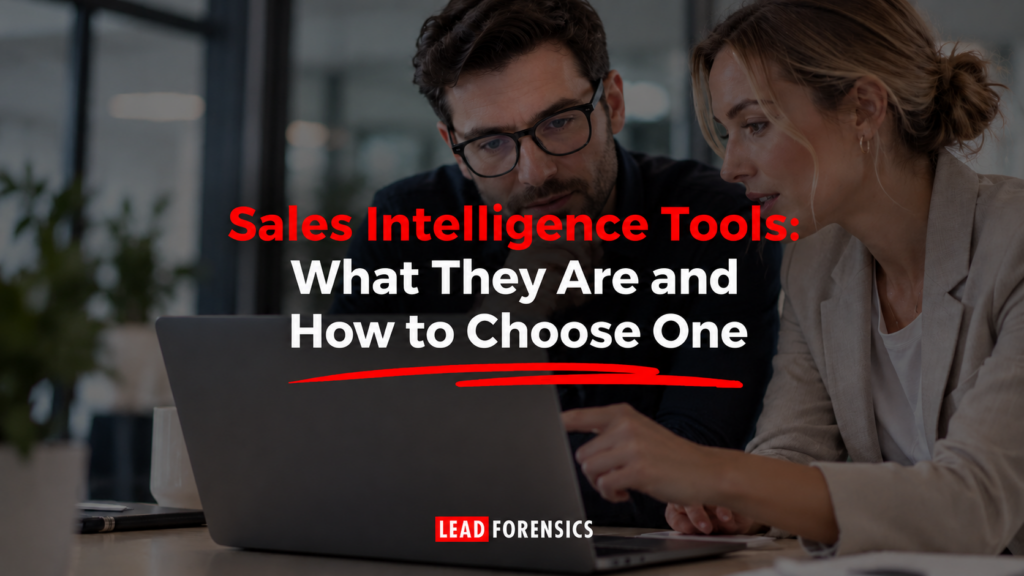
Ask ten sales leaders what “sales intelligence” means and you’ll get ten different answers. Some describe a database of contact details. Others mean a dashboard showing who’s been on the website. Others mean something closer to an AI model guessing who’s about to buy. None of them are wrong, exactly. They’re each describing one slice of a messier category, as more tools get folded under the same label.
This guide sorts that out. It covers what sales intelligence actually is and the main types of tools on the market. It also covers the questions worth asking before you commit budget to one.
What Is Sales Intelligence?
Sales intelligence is the data and tooling that helps B2B sales and marketing teams work out who to target. It also shows what they care about and when they’re ready to engage. The alternative is working a list cold and hoping.
It’s easy to confuse with “business intelligence,” but the two solve different problems. Business intelligence turns your own internal data – revenue, pipeline, forecasting – into reporting. Sales intelligence works the other way: it turns external, behavioural data about prospects into a prioritised calling list.
It matters more in B2B than in most other types of selling. The stakes per deal are higher, and buying is rarely a single person’s decision. A generic list sorted by company size tells a rep almost nothing about which accounts are actually in-market right now. Sales intelligence is the layer that’s supposed to answer that question.
What Do Sales Intelligence Tools Actually Do?
Strip away the marketing language and most sales intelligence tools are doing one or more of four things:
Firmographic and technographic data – company size, industry, revenue band, and which software/tech stack an account already runs. This is the foundation most outbound lists are built on.
Contact and verification data covers names, roles, and working contact details for the people inside a target account. It’s kept current as people change jobs.
Website visitor identification de-anonymises the companies visiting your own site. It turns invisible research, like someone reading a pricing page, into a named account you can act on.
Intent and buying-signal data is evidence that an account is actively researching a category. The signal might show up in their behaviour on your site, or in signals picked up elsewhere on the web.
On their own, each of these is just a dataset. The value shows up when a team uses them to prioritise which accounts to work first. It shows up again when a team personalises outreach around real account behaviour. That beats sending the same generic email to everyone on a list. Our guide to understanding buyer intent and identifying warm leads covers that second part in more depth. It shows how to turn activity data into a working outreach priority list.
The Main Categories of Sales Intelligence Tools
Most products in this space sit mainly in one of four categories, though plenty blend two or three:
Contact and data enrichment platforms fill in and keep current the firmographic and contact details behind a target account list. ZoomInfo and Apollo are well-known examples of this category.
Website visitor identification tools – including Lead Forensics and Dealfront/Leadfeeder – focus specifically on de-anonymising traffic to your own website. They surface which companies are researching you before anyone ever fills out a form.
Intent data providers, like 6sense and Bombora, track buying signals across the web – not just your own site. That lets them flag accounts showing category-level research activity before those accounts have even visited you directly.
All-in-one sales intelligence platforms bundle several of the above into a single suite. You trade some specialisation for having everything under one login.
None of these categories is strictly “better” than the others – they answer different questions. Enrichment tools answer “who is this account and how do I reach them.” Visitor identification answers “who’s actually looking at us right now.” Intent data answers “who’s in-market somewhere, even if they haven’t come to us yet.” Most mature outbound motions end up using more than one.
How to Choose a Sales Intelligence Tool
A handful of criteria separate a tool your team will actually use from one that becomes shelfware.
Data accuracy and freshness
Stale contact data or an inflated definition of “visitor identified” is the single biggest source of disappointment with this category. Ask any vendor how they source and refresh their data. Then ask for a trial against your own traffic or target list before committing.
Integration with your existing stack
A tool that doesn’t push data cleanly into your CRM and sales engagement platform creates a manual export-import habit. That habit quietly dies within a month. Confirm native integrations with what your team already uses before you look at anything else.
Compliance and data sourcing
How a vendor sources and processes data varies by provider and by which countries your prospects are in. That’s particularly true for anything derived from IP addresses or third-party data brokers. This isn’t a box you tick once. It’s worth asking any vendor directly how their data collection holds up under UK GDPR and equivalent regimes. Confirm the answer with your own legal or compliance team, rather than taking a vendor’s word for it. (This is general guidance, not legal advice.)
Ease of use and time to value
A powerful tool nobody on the team actually opens is worth nothing. Favour tools that get a rep to a usable, prioritised list within days of onboarding, not weeks.
Pricing model
Sales intelligence tools are priced in several different ways: per seat, per data credit, or a flat platform fee. The right model depends on how many people need access and how much data volume you actually need. Get a quote scoped to your actual usage rather than comparing vendors on headline price alone.
Support and onboarding
Most of the value here depends on a team changing how it prioritises outreach, not just buying a new login. That’s why onboarding quality and ongoing support often matter more than with simpler software categories.
Sales Intelligence in Action
The theory only matters if it changes what a sales team does differently. A few examples from our own customers show what that looks like in practice:
Walker Communications is a marketing agency working across retail, property and engineering clients. Their outbound team used visitor data to see which services a company had already researched. That meant opening warm, not cold with a generic pitch. That single change in how they prioritised and personalised outreach drove an 800% return on investment.
AW Miller used the same underlying idea: spotting buying intent from on-site behaviour. That let them focus sales effort on accounts already showing signs of being in-market. They stopped spreading effort evenly across a cold list.
Mac’s Truck Sales generated £1M in revenue in just two months using visitor identification data. The team acted on accounts already researching them, instead of waiting for a form fill.
The common thread isn’t the tool itself. It’s that each team changed its prioritisation based on real account activity. None of them treated every name on a list as equally worth a rep’s time.
FAQs
What’s the difference between sales intelligence and sales enablement?
Sales enablement is the content, training and tools that help a rep sell well once they’re in a conversation. Think playbooks, battlecards, content libraries, and coaching. Sales intelligence is the data that tells a rep who to have that conversation with. It also tells them when. They’re complementary, not competing categories.
Is sales intelligence software GDPR-compliant?
It depends on the vendor, what data they collect, and how they source it. There’s no single blanket answer for the whole category. Ask any vendor directly how their data collection and processing holds up under UK GDPR. The same question applies to any other market you sell into. Then confirm the answer with your own legal or compliance team, rather than taking a sales deck’s word for it.
How much does sales intelligence software typically cost?
Pricing varies widely by vendor, data volume, and number of seats. It’s usually sold per seat, per data credit, or as a flat platform fee. Rather than comparing headline prices across vendors, get a quote scoped to your actual expected usage. The same list price can work out very differently depending on how a team actually uses the tool.
Is sales intelligence only for enterprise teams, or can smaller B2B companies use it too?
Smaller B2B teams are often where the clearest ROI shows up. They can’t afford to spread limited sales capacity across a list evenly. Knowing which five accounts to call today instead of fifty matters more, not less, with a smaller team.